How to Avoid Pet Scams in California
Pet scams continue to rise across California, particularly in high-demand areas where buyers are actively searching online. With the state’s large population and strong digital marketplace culture, scammers often target listings involving puppies, rare breeds, or discounted animals.
While many sellers are genuine, buyers must approach online pet listings carefully. Understanding how scams operate — and how to recognise early warning signs — can protect you financially and prevent unnecessary heartbreak.
Why Pet Scams Are Common in California
California’s size and demand for pets make it attractive to fraudsters. Listings may appear to originate from local cities, but the seller could be operating from another state or even overseas.
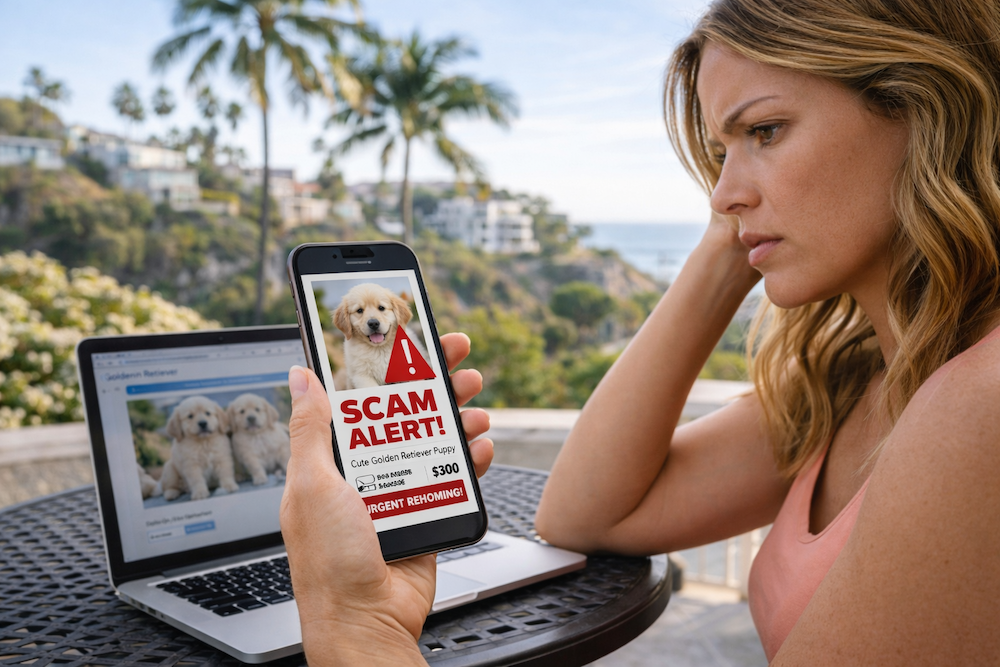
Scammers often exploit urgency, claiming that a pet must be rehomed quickly due to relocation, military deployment, or family emergencies. These stories are designed to reduce hesitation and encourage fast payment.
High-demand coastal regions and urban centres are particularly targeted because buyers are more likely to transact online.
Common Red Flags to Watch For
Be cautious of listings that use stock-style photos or images that appear professionally staged but lack context. Reverse image searches can sometimes reveal if pictures have been copied from unrelated websites.
Another warning sign is a seller who avoids direct communication. If they refuse video calls, delay answering questions, or provide vague information about the pet’s background, proceed carefully.
Requests for payment via gift cards, wire transfers, or cryptocurrency are strong indicators of fraudulent activity.
Never Send Deposits Without Verification
One of the most common tactics involves requesting a deposit to “hold” the pet. While legitimate sellers may request a reasonable deposit, it should only occur after proper communication and verification.
Ask for a live video call showing the pet and the surrounding environment. Confirm location details. If the seller resists transparency, reconsider proceeding.
Avoid Shipping-Only Transactions
Some scam listings claim the pet is located elsewhere in California and must be shipped to you. While legitimate transport services do exist, scammers frequently use fake shipping companies and request additional “insurance” or “crate” fees.
Whenever possible, arrange to meet the seller in person or verify their identity through secure communication before agreeing to transport.
Research the Seller Thoroughly
Search the seller’s name, phone number, and email address online. Repeated complaints or duplicate listings across multiple sites can indicate fraudulent behaviour.
Reputable breeders and rehoming individuals are usually willing to provide background information, references, or verifiable contact details.
Trust Your Instincts
If something feels rushed, unclear, or overly complicated, pause the process. Scammers rely on emotional decision-making, especially when a listing features an appealing puppy or rare breed.
Taking a step back and verifying details protects both your finances and the wellbeing of the animal.
Report Suspicious Listings
If you encounter a listing that appears fraudulent, report it to the platform immediately. Reporting scams helps prevent others from falling victim and supports a safer online pet marketplace in California.
The more awareness buyers have, the harder it becomes for scammers to operate.
Final Thoughts
Avoiding pet scams in California requires awareness, patience, and a willingness to verify information before sending money. By asking the right questions and recognising common red flags, you significantly reduce your risk.
A responsible approach protects not only you but also the animals that deserve genuine, caring homes.
Looking for pets in California?
Browse verified listings across California and connect with sellers committed to responsible rehoming.